Wednesday, December 15, 2010

Sing-Off Redux: Nights 3 and 4


It ain't over yet! But Nights 3 & 4 are. What you are seeing is all over - it was all taped in August. But next week, it goes live. And what an amazing conclusion to Night 4! Really, it was the only possible conclusion, unless the judges had had mercy in the first segment of the show and refused to eliminate On the Rocks.

Those Rocks Would Not Quit
What happened here? On the Rocks turned in an amazing performance. I should also add, this group was nothing if not consistent. They stayed within themselves every time out. No matter what the demands, they delivered. IMO, we should have 5 groups in the final. These guys were funny, tight, strong and very entertaining. They got better each time and delivered 110%!

What About Groove For Thought, Bob?
I should have read my own tea leaves. They are a jazz group and that's not what Sony is going for here. Did they have a little stumble in episode 3? Maybe, but so did our darling Committed. Somebody had to go, and it was the jazz group.

How About Them Backbeats?
Wow! Real a cappella singing. Not the usual spitting into microphones - just singing. Wow! We love that, we really love that.

Who Will Win?
You got me. All these groups are amazing and I could listen to them all day long. As Ben might say, I could write 10 pages on each of them describing what every singing group should emulate. You decide!

Friday, December 10, 2010

What Happened to the Whiffenpoofs on NBC's Sing-Off?


Well, the answer is a lot. First, the guys got named to the collegiate super-group in May of 2010. Sometime around June, they were invited to be on the show because, after all, they are the oldest collegiate a cappella group and pretty much established the genre (strike 1, more later). They scrambled to deal with the legalities and contacted me for a referral to an entertainment lawyer, 'cuz after all, these guys are just students and artists.


Once the ball got rolling, they actually had to face the fact they had never sung together and had no repertoire (strike 2, still more later).


They decided to be themselves, pull out all the stops and be Choral, not struggle to learn how to beatbox and to present themselves with their usual with class and style. They would wear their signature white tie and tails, strut their stuff, lay claim to the high ground and make all of America drink the from goblet of high culture (strike 3).


Did they deliver on the goods? Absolutely! Did they knock socks off from Boston to Berkeley? You bet! Did they get eliminated? Yep, that too!


So What the Heck Happened?


When the guys contacted me, I had many colleagues tell me they should not do it. They should not go compete on a show where the style of a cappella has morphed into strict instrument imitation and beatboxing. When you close your eyes, many of today's groups sound like the original bands and the Whiffs just don't do that. They spin something Choral and hopefully ethereal with everything they do. In short, they don't dance, they don't beatbox, and they'll get eaten alive.


I didn't buy that. The new style is just a way to use the human body to do what we always wanted to do - the rockin' dance songs we all loved. Adapting a popular song to a cappella always posed a big challenge because the stretch from the band performance to the sung performance was usually too great. A song without the signature lead guitar solo or those cymbal crashes usually was just plain empty and hollow. So along came beatbox with the 80's hip-hop movement, bolstered by the vocal stylings of Bobby McFerrin. Soon this was integrated into street corner a cappella and eventually into much of the collegiate ranks. Did it come from the Whiffenpoofs line? No. The a cappella line is made of multiple paths and frequent splinterings from the main line, which is Barbershop. More on that another time.


But what did worry me was these guys would expose themselves to losing. How could a group with the cachet of the Whiffenpoofs go on a show where the Tufts Beezelbubs had gone to finals in 2009, and not win? This would damage their image!


Would their classic style hold up? I had no doubt it would, and it did. But in the second season, the stakes had been raised, and the show's agenda had hardened against them in ways subtle, but certain.


"Sing Off", the Greatest Show on Television!


What is the agenda of "Sing-Off"? Well, first it is to be the Greatest Show on Television. The judges have enunciated this phrase several times. A worthy goal, no doubt, and frankly to me it is just that.


It does just what the judges have said - it takes "raw talent" developed to a striking level, and puts it on display for all of America. Anyone who has ever been serenaded by a cappella singing knows just how exciting this genre is. It moves you to tears, to joy, to goosebumps born of deep emotion. Still, getting someone to go to a choral or a cappella performance is like dragging a mule out of the barn. Why? Well, it's personal. Yes, it's a close-encounter. It's not like watching Billy Joel on stage. It's very direct. It's in the body. Ok, so it's not a t-group, but it does have intimate characteristics that make people shy away, even though they all like singing.


Don't forget, the greatest show on television is in its second season. A lot of professional groups spent the last year setting their sights on it. The bar is higher than it was in 2009.


So, Tell Me About the Agenda


Simple. Read the tea leaves. Who are the sponsors? Who are the Producers? What is the Prize? Who are the judges? These things tell you everything about who wins and who loses. After all, every group is superb. They auditioned over 400 groups and selected the best 10. How bad can any individual group be? Every single one is good enough to entertain millions of people on national TV. So, start with the tea leaves and then break it down - it's all right in front of you.


These are the Judges:

  • Nicole Scherzinger - Pop/R&B singer
  • Ben Folds - Alternative/Pop Rock singer/songwriter
  • Shawn Stockman - R&B singer

This is the Producer: Sony Pictures Television

This is the Prize: Cash + Epic Records/Sony Music Recording contract


What Do the Producers and Judges Want?


Simple. They want to find a sweetheart a cappella group to sell a lot of records. A group that connects with the masses of folks willing to buy tunes for their iPods. Do they care if its beatbox or not? No, they really don't. They are looking for charisma, authenticity, connection, quality and street appeal. You will find this stated over and over in the judges responses to the performances. They are very focused. Does quality come first? Yes, but don't forget quality is made of all the the above components, so yes, it does.


Do the Whiffs have a 'tude?

Yes, and why shouldn't they? They forked off Barbershop in 1909 and started a gigantic experimentation with vocal harmonization that has evolved to this day, to this competition. Are they responsible for all of it? No. Do they think they are? Yes. Well, did they really start it? Yes, but although they have been a driving force, they are not the pioneers of everything in the movement. Hmm, so when they talk about who they are they ruffle feathers, don't they? Listen to Shawn Stockman's comments after their first song "Grace Kelly", on episode 1. In addition to saying how the dynamics were "like drama", because their dynamics were refreshingly more pronounced than the other groups so far, and saying they were "off the hook", which they were, he also mock-thanked them for inventing a cappella because "none of us would be here today" without them. Yes, the Whiffs have a 'tude, and their pedestal is high. You can cast a stone or two and watch them fall. It's fun, like bowling. Strike 1.


Are the Whiffs a true Super-Group?

Yes and no. Like The Backbeats, they are formed of the best of the best. Hand-selected from the junior class among the large and talented singing community at Yale, these kids have been rehearsing 6 days a week and singing for money since freshman year. Some of these guys came to Yale expressly to sing with the Whiffenpoofs and launch a career in entertainment. Is everyone a superstar? Well, a lot of them are, but some guys are just really good ensemble singers. But the fact remains, they only had a handful of weeks to learn a pile of music and to gel with one another. The Backbeats did the same thing. Both groups did it very, very well. In August, The Whiffenpoofs are not yet a true super-group; they are just getting started. Put 'em back in the oven. Strike 2.


Do the Whiffs have 'Street Appeal'?

No. They are very intelligent wiseacres who love to play with words, and with the artsy, silly side of your brain. They love high art, sophistication, Broadway and the better things in life like wearing white tie and tails. This is who they are. They are children of Cole Porter. This is not a bad thing, but on Sing-Off, it's strike 3. Where's my bowling ball?


Did the Whiffs Deliver?

Oh yes, they did! They hit it out of the park with both performances. I thought their "losing" performance was stunning. Don't forget, all groups are competing at the highest possible level. Did The Whiffenpoofs "sing down their noses", as Ben Folds said? No, they did not. They pulled out all the stops and delivered on what they do. It was a little high brow, but it totally blew the roof off. They melted Nicole's heart. If they had not been so good, they would have been slotted in the show's first half and would easily have survived until episode 3. But consider strikes 1, 2 and 3 above. They have a 'tude, they didn't have time to find themselves and they are not, and never will be, "street".


So, Who Will Win?

Stop it! Everyone wants to know that, but everyone already knows the answer: Committed. Why? They got it all. They have no 'tude - they are who they are - a bunch of gospel singers who just love to sing and express from the heart. They are well experienced singing together - each guy knows where he fits and how to contribute to the whole. They are not trying to figure out who should sing lead or what styles or combinations will work. Finally, they got street appeal. They sing right to you and me, about things that touch everyone's heart. They are not playing with words, making jokes or trying to impress. There is no hidden agenda. They are authentic. Listen to the judges. This is it!


Who are the runner ups?

Why do you always ask such tough questions? There are several groups who are poised to knock it out of the park, and some of them have never done a lick of beatbox. See, it's not about that - it's about connection, authenticity and communicating feelings directly from the songwriter to the audience, like a bolt of lightning. Listen to the judges. They are telling you everything!


But these are my favorites:

Groove For Thought - I am a sucker for killin' jazz chords and these cats are smooth.

Street Corner Symphony - These guys really rock my world with their feel for the songs.

Jerry Lawson and the Talk of the Town - Classic, they stand and deliver the genuine article.


Sunday, October 24, 2010

More Lessons from the World of Sport

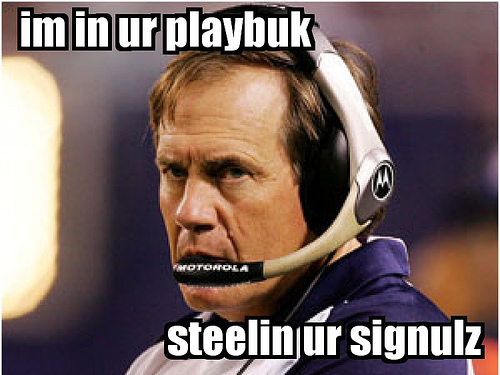
Last week following the NE Patriots' win over the Baltimore Ravens, during the post-game Q&A, I was struck by several of Coach Bellicheck's responses. The man doesn't have a lot of patience for things that don't win football games. Sometimes he speaks a truth so plainly, it sounds harsh. Here is an excerpt from the Q&A that struck me:

Q: When you evaluate Deion Branch’s array of skills, what do you think are the best two or three?

BB: He can get open and catch the ball. Don’t make it too complicated.

What a gift of cutting right to the core! Don't make it too complicated. We all know a cappella singing is a lot like NFL football, isn't it?

Don't Make It Too Complicated: A Page From Bellicheck's Playbook


As musical directors, we coach our singers to produce better vowels, a beautiful blend, a sound that resonates and rings in the hall. We teach them to breathe from down low, support with abdominal muscles, hold the jaw this way, only use the tongue to make this sound, squeeze this, yawn, lift this, stretch that and so on. When considering how to raise the bar in your choir, remember the simplicity of Bellicheck's genius. Don't make it too complicated! A singer has to take a breath and make a good sound. Sure, a zillion components go into making that sound a good one, but everyone fundamentally knows how to do it. Your job is to draw that out without over-complicating it.

We need to recognize that fundamental truth as we coach our singers. Making a beautiful sound involves getting out of the way and allowing the body do what it was born to do. At some level, our body knows how to do it without any thinking at all.

A Cappella Singing and MLB Baseball: "We Have Eliminated Thinking!"

Remember the 2004 Red Sox? How did they overcome such a huge deficit and overcome a superior opponent? I recall it was Johnny Damon who answered the question: "We have eliminated thinking!" That team found a way to get thinking out of the way and became an irresistible force.

A couple of weeks ago, Blue of a Kind was working on a piece with quite a bit of sparse, syncopated, percussive entrances. The guys were coming in near the off-beat point, but with a pronounced staggered effect. Each "bop" sounded like "b-b-b-bop" and the effect was killing the song. For weeks, we had drilled the rhythm, talking it through while tapping the tempo. We ran it dozens of times in slow motion and fast motion. The guys listened to learning track files countless times between rehearsals, but when the moment came to sing it, all we got was "b-b-b-bop".

Becoming An Irresistible Force

I could see everyone was trying very hard to get it right. Their eyes seemed to be picturing the sheet music and trying to figure exactly where the "bop" was. Sometimes we get too tied to those black notes on the white page! I decided the only way to make this work was by eliminating all that thinking and get it down to something which had to be in their bones already. I told them they all knew exactly where the entrances were and asked everyone to close their eyes and sing as they felt it. Guess what? They nailed every single entrance! The song took on a new life, one that was totally irresistible. This is what you want!

You Already Know How To Do It

I had a voice coach who used to say, "If you can talk, you can sing." Singing is nothing more than talking with a little more time spent on the vowels. Many of us probably engage more natural singing skills calling our kids to dinner than in choir practice. When we sing, we get concerned about how it sounds in our head, we apply tension in our vocal apparatus trying to adjust what we hear hoping to diminish our sense of feeling exposed or not sounding good enough. The result is a twisted and distorted sound. It just ain't natural! We need to impart tips and tricks that enable our singers to do what they already know how to do!


Sunday, October 10, 2010

Society of Orpheus and Bacchus mini-reunion

This past weekend, 25 alums of the Society of Orpheus and Bacchus gathered on hallowed soil in New Haven to sing, eat, drink, play some golf and reconnect with each other. We swapped stories, met spouses, had laughs and we sang. Oddly, we had done virtually none of this for the last 35 years or so. A few years ago, the group held a reunion to celebrate its 70th anniversary. A few of us looked around the room and noticed how there were almost no attendees who had graduated before the mid '70's. And we planned to do something about it.


I spoke to several of "missing" guys and many said they'd never return. They had seen the group at one time or another 10, 20 or 30 years ago and decided they did not belong with these people. The identification vectors had been broken. Some didn't like the performance values of the group. Some found the humor offensive. Some observed the kids were not "like us". And some found they couldn't sing the old songs with these guys. The music had changed. There were new songs, of course. But many of the old songs had been reworked and the guys could not close their eyes and sing them from beginning to end. There were too many speed bumps!


One of my old pals known affectionately as Kow decided to forge ahead and plan an event just for this lost generation. Maybe we couldn't reach back to the 40's and 50's, but at least we might collect the guys we knew, sing the old songs as we had learned them and through that reestablish a connection with the group.


We cloistered ourselves at first - sang together with restored musical arrangements, something I have been working on the past several years. We were able to interest several of the group's most significant arrangers to come and conduct "master class" rehearsals with the guys. You see me pictured above at the new Mory's with two of my great heros, Dave Bass and Chan Everett who ran these rehearsals. We dined together, swapped tales and songs and even entertained the patrons at Mory's as we used to as undergraduates. Cups were passed. Some magic began to kick in.


Singing as One


We had a more in-depth master class rehearsal the second day and really started to sing like something of a unit. Dynamics were happening, the chords were truing up, the sound was producing goose bumps. At dinner that evening, we sang between courses and this time the songs sounded more solid, more developed. We even tried a few songs we had not rehearsed and pulled off at least one song I did not dream possible. We were singing again!


Reconnecting


Then we took our stuff to meet the young men of the current group. We met at the SOB house where many of them live, circled up in the backyard, eyeballed each other for a bit and then started swapping tunes. Eventually, we sang some together. The young men met some of their idols and legends of the past. They got to shake hands with some of the best arrangers and most clever jokers of the groups history and hear some songs they did not know existed. The old guys got regaled by some stunning voices singing both old songs and new, and suddenly it all seemed really cool. We met a couple of the guys we'll be seeing on TV this fall on the next NBC "Sing Off" series. We had Sam Weisman, producer of that show singing baritone on our team. These guys are stars, but first of all they are just good kids who love to sing, just like us. We all realized how much singing connected us to good friends and fun, making it possible to handle the stress of Yale and the demands of life. We all felt like we belonged together. We found the connection to the living tradition that had been broken for many of us.


Sunday, August 29, 2010

Botch-A-Me, why don't ya?

Just a quick note: the video of Botch-A-Me's first performance is posted on YouTube and you can check it out:


Dayna Brown did a a phenomenal job on the solo and director Murray Kidd and Polymnia made this a great experience. I had fun taking the cornball "Tony came from Italy..." intro and accompanying the soloist with male a cappella, then introducing the women's voices in the last few measures before verse 1 begins. The break section took a more modern turn than in the days when Rosemary Clooney sang this number. Hope you like it!

Bob

Wednesday, August 11, 2010

The Salem Antique & Classic Boat Festival


Blue of a Kind will be singing outdoors at this festival above in Salem MA on August 29 from 12 to 1 pm. Singing in the open air is always exhausting. The wind is blowing, birds are flying by, children run around, women smile and mosquitos and flies dive bomb the baritones. There is no end to distraction! In addition, your sound flies out into space. It has nothing to bounce off and you can't hear anybody else. You easily can't sing as one. Tuning, matching vowels and dynamics, even staying on the same verse together all become much more difficult.


Electronics to the rescue! In this case, you want a sound system to amplify you for the benefit of the audience as much as for yourselves! What kinds of equipment does your group have for outdoor gigs? We'd like to hear.


Blue of a Kind has kept it simple. We typically sing indoors and enjoy decent and sometimes superb acoustics. Sometimes the venues are large, and the house will provide an array of microphones and a sound engineer to amplify the whole group.


For a bunch of guys who don't rehearse with any electronics, learning how to balance the sound can be tricky. If you've sung with a microphone, you know a few things - how to avoid popping, how to lay back so you don't overwhelm the audience with your voice and how to produce a sound that is basically in a balance with the rest of the ensemble.


Blue of a Kind is working with a simple system these days for outdoor work. We have sung on floats in parades several times with this setup, and it has the advantage of being powered entirely by batteries. It's portable and does the job surprisingly well.


The core of the system is a Boss digital recording system that can mix several microphones and the monitor can be jacked into a separate amplification system, in our case the Roland Cube Street. This gives us a little something to listen to as well as projecting our sound a bit more to the audience. The same system can record the performance. Blue of a Kind uses these recordings the same way football teams use game tapes.


We're looking at better sound systems to manage indoor and outdoor performance situations. The requirements are pretty much the same. First and foremost, the system must be portable. We don't want to lug a ton of stuff around - we're a cappella and we travel light! Battery power is a plus factor as is the ability to make field recordings.


Field Recordings

These became really important early in our development. Here's why:


First of all, the group generally takes away a single impression from any given performance. If it is successful overall, the blemishes are utterly forgotten, except by the director! As director, trying to make a lesson out of a successful performance often falls on deaf ears. So early on, I decided the guys needed to have a listen to each show with some objectivity in order to take ownership of the issues that arose in performance.


So field recordings became the "tail of the tape"; the recordings don't lie. You can still tell whether the audience digs it, but your emotions and nervous energy are gone now. You can listen coldly and hear exactly what you did or did not do. You can ask yourself whether it moves you. You can talk about it as a group, press rewind and hear it again.


Sometimes those field recordings are dead solid perfect. You can use them on your next CD as we did on To the Sky. It was not only a good performance; we had used a top-notch digital recorder to capture it.


How is your group handling concert recordings?


The App Store: Tools for the Singer and for the Director

You know I work for Palm. OK, we're HP now. We "Palmers" all love gadgets and especially Apps. Apple made Apps the next best thing to sliced bread, and Palm has The App Catalog. We're making the world a easier place to live using the smart phone in your pocket. Hey, we're carrying these tiny computer/communicators, so of course it's really cool if they can tell us when the moon is full or help us find a restaurant.


As a musical director, I'm finding Palm Apps now like Pitchpipe, Metronome and other basic tools I use for singing. My dream is to be able to create and assemble songlists for concerts, and to tap each song in the list to hear the starting pitches, maybe the first bar or two in the correct tempo. Right now, I carry a real pitchpipe and a set of note cards with handwritten information. I might have to write this app myself.


If you know of any great Apps out there for any phone, post a comment here.


Sunday, August 8, 2010

A New Season Begins!

Well, it's been a great summer. There are still a few weeks to go and lots of sailing ahead so I am not calling it quits yet! However I am thinking about the coming year. Blue of a Kind just started preparing for the coming season. Like a professional sports team, a choir has to return to camp and reconnect with how they do what they do. Choirs like us also have to begin learning their Holiday music long before the snow starts flying. There's work to do!!


How I Spent My Summer Vacation


The summer began with a 10 day trip to Cuba to sing with the Yale Alumni Chorus. It was the experience of a lifetime. Many non-US travelers have enjoyed visiting Cuba since 1980, but for US citizens you need to jump through a lot of hoops to do it legally. Luckily, YAC managed all this hard work for us, and the choir only had to sing and prepare to share friendship.


We have a phenomenal group of singers of all ages, and one of the best directors you could ever sing under, Jeffrey Douma. The singers work independently to learn the music for months. They gather for a couple of regional rehearsals under Jeff to put it all together. Once in Cuba, we rehearsed a couple of times a day for the first few days to get the spit and polish we needed. After Jeffrey shapes the output of 200+ voices, the results can be quite intoxicating! We were able to sing joint concerts in Matanzas and Havana with professional choirs and perform at a very exceptional level.


The Cuban people were thrilled that we wanted to come sing for them, put all our hearts and souls into it, and meet them as friends. It was a wonderful experience and we made many friends.


Summer Arranging


I also did more arranging this summer, focusing on classics from the American Songbook, and produced these new works for men:


Getting Some Fun Out Of Life

Lil' Darlin'

I Hadn't Anyone Till You


And I reworked a couple of SATB arrangements for men. These two were taken from the YAC Cantemos! repertoire:


El Bodeguero

MLK


Topics for the Coming Year


What shall we talk about this season? I'm developing an agenda for Blue of a Kind so we can continue developing and having fun. I have also developed a list of blog topics for the coming season. Last year, I got into a groove of producing an arrangement a week for 6 months and wrote about each one. This took me on a very single-minded journey which was quite productive, but requiring many hours of work before I wrote the first word of my blog entry. It also changed the course of this discussion, which is aimed at all things a cappella, rather than arranging tips and techniques.


If these are of interest (or not) I hope you'll post a comment with your thoughts:


  • Becoming a better ensemble singer
  • Developing a structure to support learning and development
    • Section leadership, rehearsals
    • Personal practice time
  • Amazing singing - CDs, groups, new releases
  • Your voice - approaches to producing better sound\
  • Choral vocal production
    • Balancing chords
    • Consistent tone
    • Singing parts as lines
    • Vowels
    • Forte consonants
    • Romancing the lyric
    • Singing softly

  • Singing in tune
    • Going flat
    • Going sharp

  • Ensemble singing topics
    • Singing on auto-pilot: eye contact and engagement
    • Dynamics
    • Color
    • Legatto, staccato, marcato...
    • Exact attack and exact pitch
    • Releases
    • Shouting, bellowing
    • Trusting your sound

  • Performing
    • Movement in performance
    • Dealing with nerves in performance
    • Translating rehearsal success into standing ovations

  • Marketing, Increasing audience, getting more gigs - web, local media, PR
  • Music selection
  • Ordering songs in performance or on your CD
  • Working with Finale, Sibelius
    • Tips and techniques
    • Archival concerns

  • The joys of directing
  • Rehearsal strategies
  • Vocal Percussion and imitating bands
  • Arranging music - tips and techniques


And What Else?


Do you have any other ideas or things you'd like to hear about or discuss? Post a comment and let me know!